Maybe you have been here before. Maybe this is the first time you are letting yourself admit that something needs to change. Either way, the fact that you are reading this matters.
Recovery from drug addiction is one of the hardest things a person can move through. Not because people lack strength, but because addiction is not simply a habit. It reshapes the brain, rewires relationships, and quietly becomes the thing a person organizes their entire life around. Stepping away from it asks for more than willpower. It asks for the right support, at the right stage, from people who actually understand what is happening.
Research on addiction consistently shows that substance use disorders involve changes in brain function, decision-making, and emotional regulation, which is why recovery requires support rather than shame. NIDA’s DrugFacts overview on drug use and addiction further explains how addiction develops and why treatment support matters.
At Toronto Trauma & Addiction Counselling, we work with people at every point in this process, from the first conversation where someone is not even sure they have a problem, to the long-term work of building a life that sustains recovery over the years. What we see, again and again, is that things get more manageable when the path ahead is clear.
What This Guide Covers
- Drug addiction recovery is not a single event. It is a multi-stage process that often begins with awareness long before formal treatment starts.
- Different stages of recovery require different kinds of support, from assessment and detox to therapy, relapse prevention, and long-term maintenance.
- Recovery is rarely linear. Setbacks and relapses can happen, but they do not erase progress or mean recovery has failed.
- Professional therapy, peer support, and personalized treatment planning all play important roles in sustainable long-term recovery.
- Lasting recovery is not only about stopping substance use. It is about building a more stable, connected, and meaningful life over time.
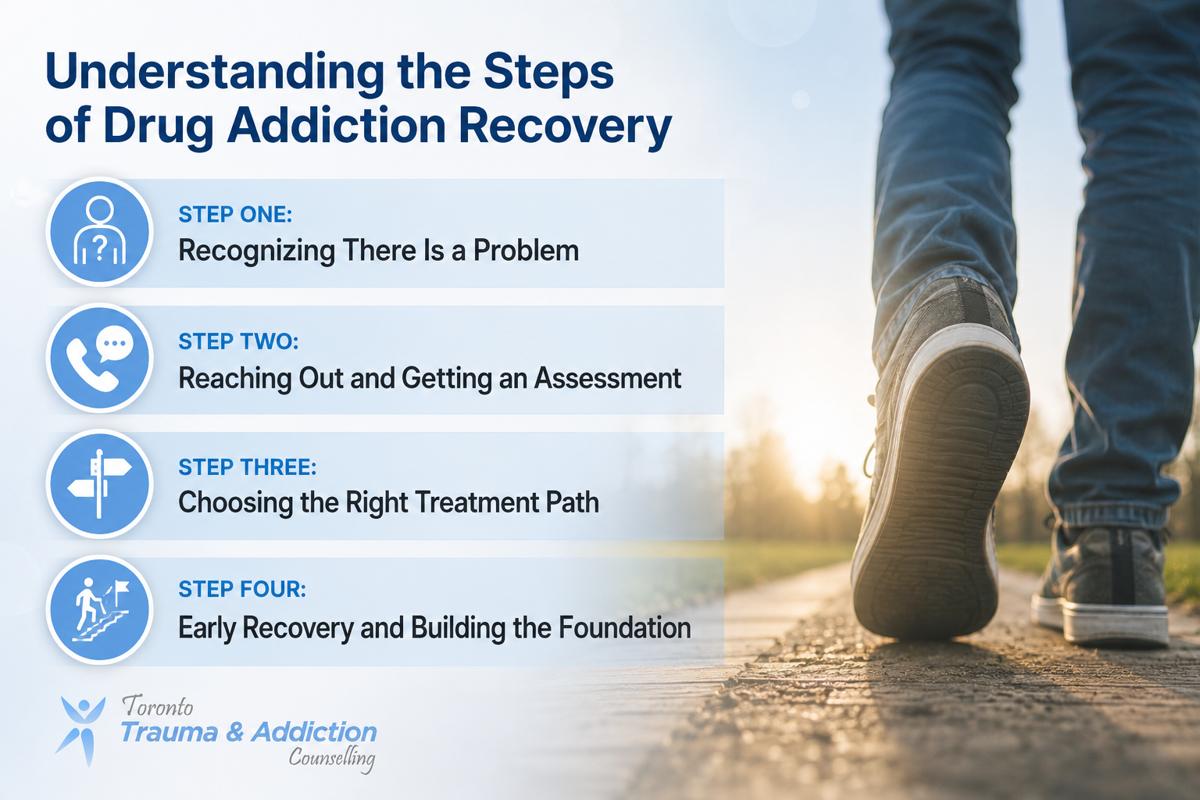
Step One: Recognizing There Is a Problem
Drug addiction recovery refers to a structured process of healing that begins long before anyone enters a clinic or picks up the phone to call a counsellor. It begins with awareness.
For many people, this is the hardest step. Addiction changes the way the brain processes information, making denial feel protective rather than harmful. Sometimes that denial is conscious, but often it is not. A person may minimize, rationalize, or genuinely not recognize the extent of the problem at all. Others may be aware, on some level, that things have gotten out of hand, but the gap between knowing and acting can feel enormous.
CAMH explains that addiction affects brain function, behaviour, and emotional regulation, which is one reason many people struggle to recognize the severity of substance use early on. There is a common saying in the addiction field that addiction is “the condition that tells you that you do not have a condition.” In many cases, denial is not simply dishonesty or avoidance. It often functions as a form of psychological protection, helping a person avoid having to fully face the behaviour itself, the impact it is having on their life and relationships, and the painful emotions that naturally surface when those realities begin to come into focus.
For some people, fully acknowledging the problem can also make it harder to continue engaging in the behaviour without discomfort, conflict, guilt, or shame, which is part of why denial can become so entrenched.CAMH addiction resource hub provides additional insight into how addiction develops and how treatment can help.
Often it takes a specific moment: a health scare, a relationship ending, a financial crisis, or a conversation with someone who cares enough to say something honest. Whatever brings a person to this point of acknowledgment, it matters. Recognizing that something is wrong is often the first real opening toward change, even if a person does not yet know what to do next. If something feels off and you are wondering whether things may be escalating, learning about the early signs of substance addiction or exploring trusted alcohol addiction counselling in Toronto can help bring greater clarity to what you are experiencing.
Step Two: Reaching Out and Getting an Assessment
Once someone is willing to acknowledge the problem, the next step is taking action toward getting support. This might mean telling a trusted person, searching for information, calling a helpline, or booking an appointment with a professional.
An important part of this process is recognizing that not everyone who uses substances has an addiction. A behaviour may still be unhealthy, risky, or cause problems without meeting the threshold for addiction. Part of a proper assessment is helping distinguish between problematic substance use and addiction itself. Addiction is not determined solely by what the behaviour is or even by how frequently it occurs. More often, it is understood through the person’s relationship with the substance: the loss of control, compulsive pull, emotional dependence, inability to stop despite consequences, and the role the substance has begun to play in the person’s inner and external life.
A formal drug use assessment helps give a fuller picture of what is happening: how long the substance use has been occurring, how it has affected different areas of life, what underlying factors may be contributing, and what level of support or care is appropriate.
This is not a test to pass or fail. It is a conversation that helps clarify where someone is starting from so that the next steps can be approached thoughtfully and realistically. At our practice, this assessment takes place in a confidential, non-judgmental environment because how someone feels while asking for help matters enormously.
Step Three: Choosing the Right Treatment Path
There is no single correct approach to drug addiction treatment. Treatment programs range from inpatient residential care to outpatient counselling, and the right fit depends on the severity of the addiction, the presence of co-occurring mental health concerns, and the person’s life circumstances.
Common types of treatment programs include:
- Inpatient or residential programs, which provide 24-hour care and a structured environment away from triggers
- Intensive outpatient programs (IOP), which offer multiple sessions per week while allowing someone to live at home
- Standard outpatient counselling, which is often ideal for early-stage addiction or as a step-down from more intensive care
- Medically supervised detox, which helps manage withdrawal safely when physical dependence is present
Withdrawal is one of the most physically and emotionally demanding parts of early recovery. Depending on the substance, it can involve nausea, insomnia, anxiety, tremors, or more serious medical complications. This is why attempting to stop certain substances without medical supervision can be risky. A proper treatment program will include a plan for managing this safely.
Health Canada also outlines how withdrawal, relapse prevention, harm reduction, and different levels of addiction treatment support long-term recovery outcomes across Canada. Health Canada’s substance use treatment information offers additional guidance on available treatment approaches and recovery support.
Step Four: Early Recovery and Building the Foundation
Once someone has stopped using and has begun structured support, they enter what is often called early recovery. This phase is characterized by a mix of relief, vulnerability, and enormous adjustment.
The person is no longer using substances to cope with stress, discomfort, boredom, or difficult emotions. That means everything that was being numbed or avoided now needs to be met head-on. Relationships may be strained. Routines may feel hollow. The brain is still recalibrating its chemistry. It is a great deal to navigate, which is part of why people so often say that recovery can “get worse before it gets better.” In many ways, this is the stage where a person begins truly feeling the impact of what the substance had been helping them avoid, suppress, or escape from.
This is also a period when relapse is most likely, not because the person is weak, but because the skills needed to manage triggers and cravings are still being built. Recovery is not linear. A relapse, if it occurs, is not a sign that recovery has failed. It is a signal that something in the plan needs to be adjusted.
For those managing addiction to prescription medications, recovery support for prescription drug misuse is a specialized area of care that addresses the unique challenges involved, including navigating medical relationships and managing pain without dependence.
The Role of Therapists and Professional Support Throughout Recovery
Therapy is not just a feature of early treatment. It is a through-line across every stage of recovery, and it is one of the most significant predictors of long-term success.
Research published through the National Institute on Drug Abuse continues to show that long-term treatment participation and behavioural therapy significantly improve recovery outcomes over time. NIDA’s treatment research resources explore many of the evidence-based approaches used in addiction recovery today.
The most effective approaches to addiction counselling address both the addiction and its root causes. Trauma, anxiety, depression, unresolved grief, and relational wounds often underlie substance use. Without working through these, the drive to use can persist even after the substance is removed.
Our therapists at Toronto Trauma & Addiction Counselling are trained to work with the whole person, not just the presenting behaviour. That means exploring what the addiction has been doing for someone, what needs it has been meeting, and how to meet those needs in healthier ways going forward.
Seeking drug addiction counselling in Toronto with a therapist who understands both addiction and underlying mental health is one of the most important investments a person in recovery can make.
Finding Your Community: Support Groups and the 12-Step Model
Recovery rarely happens in isolation. The research is clear: social connection and peer support are among the strongest protective factors against relapse.
The 12-step recovery program, originally developed by Alcoholics Anonymous, provides a structured, spiritually grounded framework for understanding addiction and maintaining sobriety. The 12 steps move a person through acknowledgment, surrender, moral inventory, making amends, and ongoing service to others in recovery.
Narcotics Anonymous (NA) and SMART Recovery are two of the most widely available options for those seeking community support around drug addiction specifically. These groups offer a sense of belonging, accountability, and lived experience that professional treatment alone cannot replicate.
Support groups are not a replacement for professional support for drug addiction recovery, but they are a powerful complement to it. For many people, these groups become a cornerstone of their long-term maintenance plan.
The Canadian Centre on Substance Use and Addiction also emphasizes that recovery support often works best when professional care, peer connection, and long-term community support are combined. CCSA’s treatment, support, and recovery resources provide additional information on recovery systems and support options across Canada.
Coping Strategies for Stress and Triggers in Long-Term Recovery
Active recovery, the ongoing daily work of staying well, requires a toolkit. Cravings do not disappear after early sobriety. Triggers, the people, places, emotions, and situations associated with past use, can persist for years. The goal is not to avoid them forever. The goal is to respond to them differently.
Effective coping strategies for stress and triggers include:
- Mindfulness and grounding practices, which help interrupt automatic responses to cravings
- Regular physical movement, which supports mood regulation and reduces anxiety
- Structured routines that reduce unplanned time and decision fatigue
- Honest communication with trusted people about what is hard
- Therapy sessions that revisit and adapt the plan as life circumstances change
Building a drug-free life is not just about removing the substance. It is about filling the space with things that are genuinely sustainable. That includes meaningful work or purpose, relationships built on honesty, physical care, and creative or spiritual outlets.
Preventing Relapse and Building a Life That Sustains Recovery
Long-term recovery maintenance is an active, ongoing process. It is not something that happens automatically after a certain number of days clean. It requires continued attention, continued investment, and continued honesty.
Relapse prevention planning is a formal part of what we do with clients at Toronto Trauma & Addiction Counselling. We help identify personal triggers, map out warning signs, create response plans, and build the kind of support network that can hold someone steady during a difficult period.
For those who want a counselling approach tailored specifically to where they are in their recovery journey, personalized counselling for addiction recovery is the most effective way to ensure the support you are receiving is actually aligned with your life.
Recovery does not have a finish line. But it does have a direction. And with the right support, that direction becomes steadier, more hopeful, and more sustainable over time.
Key Takeaways
- Drug addiction recovery is a process with distinct stages, from awareness through long-term maintenance, and each stage calls for different kinds of support.
- Withdrawal and early recovery are among the most vulnerable periods. Medical and therapeutic support during this time is essential.
- Recovery is not linear. Relapse is a common part of the process, not a sign of failure.
- Therapy that addresses root causes, not just the addiction itself, produces the most sustainable outcomes.
- Community, coping skills, and a personalized long-term plan are the cornerstones of lasting recovery.
Frequently Asked Questions About Drug Addiction Recovery
What are the main stages of drug addiction recovery?
The main stages typically include awareness and acknowledgment, reaching out for assessment, entering a treatment program, navigating early recovery, and transitioning into long-term active maintenance. Each stage has its own challenges and requires different types of support.
Is relapse a sign that recovery has failed?
No. Relapse is common during recovery and does not mean a person is beyond help. It is a signal that the current plan needs adjustment. Most people who achieve long-term recovery experience at least one relapse along the way. What matters is returning to support and continuing forward.
How long does drug addiction recovery take?
There is no fixed timeline. Recovery is a lifelong process for many people, though the intensity of active treatment typically decreases over time. Factors like the type and duration of addiction, co-occurring mental health concerns, and available social support all influence how the journey unfolds.
Do I need to go to a residential program to recover from drug addiction?
Not necessarily. The right level of care depends on the severity of the addiction and your individual circumstances. Many people recover successfully through outpatient counselling, particularly when paired with strong social support and ongoing therapy. A proper assessment will help determine what is most appropriate for you.
How can Toronto Trauma & Addiction Counselling help?
We offer confidential, non-judgmental counselling for individuals at every stage of drug addiction recovery. We address both the addiction and the underlying factors that drive it, including trauma, anxiety, and relationship difficulties. We also support partners and families throughout the process. Reach out to us to book a consultation or learn more about what we offer.
Closing Thought
Reading a post like this may feel overwhelming. For some people, it can sound exhausting, draining, or like far too much work. And the reality is that recovery does require honesty, support, effort, and a willingness to face difficult things that have often been avoided for a long time. At the same time, it is important to remember that the goal is not simply to stop using substances. Recovery is often the only real path out of the chaos, deterioration, secrecy, trauma, and disconnection that addiction creates over time. But beyond that, meaningful recovery also opens the possibility for something far greater: a life with genuine connection, emotional depth, honesty, purpose, and stability.
Many people describe discovering a quality of life in recovery that they had never experienced before, even prior to the addiction. In some cases, the addiction and recovery process become the very thing that forces a person to confront wounds, patterns, fears, and ways of living that may otherwise have remained hidden for a lifetime. While nobody would choose the suffering addiction causes, it is not uncommon for people in strong recovery to eventually recognize that the process led them toward a more grounded, connected, and meaningful life than they may otherwise have found.